Birmingham’s biggest new station has no trains yet, and the council is already marketing 6,652 planned homes around it.
The short answer. We arrange bridging loans in Birmingham from £200k, for business and investment property. The average Birmingham home sold for £233,158 in July 2026, so a £200k loan usually means a home or two at the upper end, or a small portfolio.4
Discuss your deal 0330 223 7872

Ten Questions Investors Ask About Birmingham
1. Why is everyone talking about Digbeth?
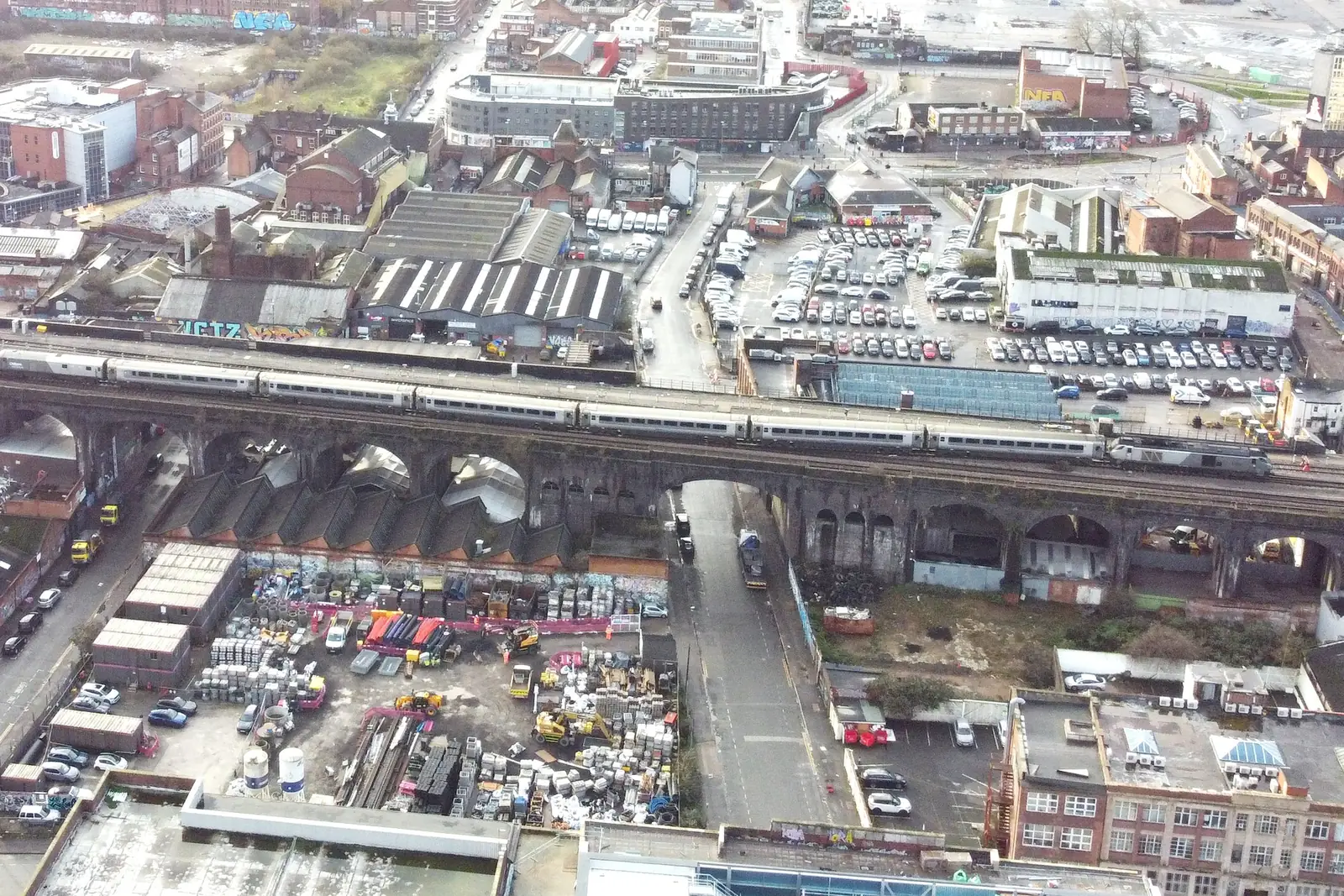
Because Birmingham City Council has put a number on it. Its Digbeth Prospectus, launched in May 2025, lays out what could be built, and most of the plots sit near the planned HS2 Curzon Street station and the Eastside Metro extension. The council is not a big landowner there. It is looking for partners. For a bridging investor, the interest is the ground around it: buildings and land that change hands while the plans take shape.(Sources 1 and 2.)
| Digbeth Prospectus | Planned |
|---|---|
| Homes | 6,652 |
| Commercial space | 310,527 square metres |
| Plots | 35 |
2. Is the station really being built?
Yes, slowly and visibly. The piling that holds up the new Curzon Street station is finished, and no opening date is given. HS2’s senior project manager Alistair Morgan said: “we’ve still got a lot of work to do before the first passengers arrive.” (Source 3.)
| Curzon Street piling, as at March 2026 | Done |
|---|---|
| Concrete piles installed | 2,011 |
| Depth of each pile | 6 to 24 metres |
3. What does £233,158 buy in Birmingham?
Here is where the city stands, from the Land Registry.
| Average Birmingham home, July 2026 | Price |
|---|---|
| All property types | £233,158 (+2.1% on a year earlier) |
| Flat | £143,702 |
| Terraced | £221,098 |
| Semi-detached | £273,995 |
| Detached | £441,821 |
(Source 4.)
4. How does that line up with a £200k loan?
A lender often lends a share of the price, not all of it. Take 65% as an illustration: the property then has to be worth about £307,692. Only the average detached home in Birmingham clears that on its own. The rest of the market reaches it by pairing properties, buying a block or buying something above the average.

5. What would a two-property deal cost?
No real client sits behind this case; it is invented, and the market numbers are real. A landlord’s company buys an average terraced house and an average flat in the same part of the city, refurbishes both and sells them within twelve months. (More on one loan over several properties in question 9.)
| The purchase | Amount |
|---|---|
| Average terraced house | £221,098 |
| Average flat | £143,702 |
| Together | £364,800 |
| Loan at about 65% | £237,000 |
The costs come to this.
| Cost | Amount |
|---|---|
| Interest at the average published rate of 0.77% a month (41 lenders, as at 13 November 2026) on £237k | £1,825 a month |
| Twelve months of interest | £21,899 |
| Our fee: 1% of the gross loan, generally due on completion. On a complex case an application fee can apply, agreed in writing first | £2,370 |
| Lender’s legal fees | About £1,500 to £2,000 plus VAT on a loan of around £200k; more on a larger loan |
| Your own solicitor | Ask your own solicitor for a quote |
| Valuation | Nil to about £100 for a desktop valuation; up to about £2,000 for a full one, plus VAT |
| Arrangement fee | Set by the lender, so ask for the figure early |
Illustrative: every case is priced individually. Simple monthly interest at the average published rate; compounding is left out. The rate you are offered will turn on your own case.
6. What kinds of deals suit a bridging loan here?
The ones with a clock on them. Buying and refurbishing a tired house or block near the regeneration. An auction lot. A commercial unit or shop with flats above. An HMO purchase. Land bought ahead of the homes the council hopes to see built. Pick your way out, sale or refinance, before you bid.
7. Do I need planning permission to turn a Birmingham house into an HMO?
Probably, yes. Since June 2020, turning a family house into a three-to-six-person HMO in Birmingham needs planning permission, under a city-wide Article 4 direction. Ask before you offer: the council’s planning team can say where a particular house stands. Larger HMOs always needed permission, and licensing is a separate matter. (Source 5.)
8. Digbeth’s plans slip. Does the deal survive?
It should, because the Prospectus gives no delivery dates and its sites run from early planning to advanced planning. We would want the sums to work on today’s rent or sale price, and treat the regeneration as a bonus. (Source 2.)
9. Can one loan cover several properties?
Yes. A single bridging loan can be secured against more than one property, and that is a common set-up. Send us the addresses and the exit you have in mind.
10. How quickly can I get terms?
Indicative terms within 4 hours on straightforward deals, often quicker.
Weighing up a Birmingham deal? Give us the properties, the timetable and the exit.
Discuss your deal 0330 223 7872
For business or investment purposes only - never secured on a home you or your family live in.
Nearby, see bridging loans in Wolverhampton.
Sources
- Constructionwave, “More than 6,000 homes proposed in regeneration plans for city creative quarter”, 28 May 2025, reporting Birmingham City Council’s Digbeth Prospectus.
- Building Design, “Birmingham City Council seeks investors in Digbeth regeneration with plans for 6,000 homes”, 28 May 2025.
- Rail Advent, “New images released of new Birmingham railway station”, updated 5 March 2026, quoting HS2.
- HM Land Registry, UK House Price Index, Birmingham, July 2026, provisional.
- Birmingham City Council, “City-Wide Article 4 Direction relating to Houses in Multiple Occupation (HMOs)”, birmingham.gov.uk/hmoarticle4.
Last updated: